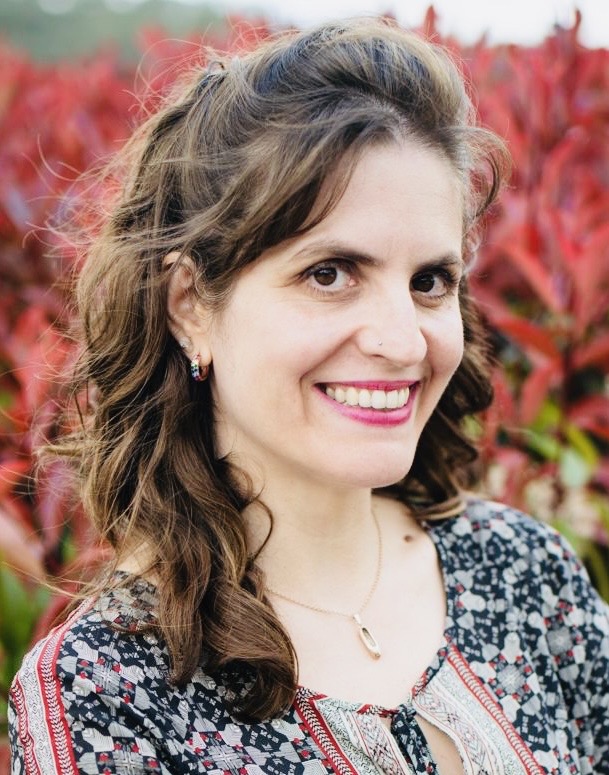
I have a PhD and MA in Linguistics from The University of Texas at Austin (UT Austin), with one-year stays as a visiting PhD student at the Massachusetts Institute of Technology (MIT) and the University of São Paulo (USP), and as a Visiting Scholar at Boston University (BU). I graduated with a BA in English Philology from the University of the Balearic Islands (UIB) and also studied as an undergraduate exchange student at Queen Mary University of London and UT Austin for one academic year each. I have taught a wide array of Linguistics and language as a second/foreign language (English, Spanish, Portuguese) university courses (both graduate and undergraduate courses) at various institutions in the United States such as at Wellesley College, BU, UT Austin, College of the Holy Cross, and most recently in Spain at UIB. Currently, I am a Junior Researcher at the Center of Linguistics of the University of Lisbon (CLUL), a research position funded by FCT (Fundação para a Ciência e a Tecnologia) from Portugal.
In my current projects, I explore how we talk about time and space. More in particular, I focus on how languages express temporal or spatial delimitation. From my initial examinations, it appears that there is quite significant cross-(and intra-)linguistic variation in how words with otherwise similar meanings behave. I hence take a cross-linguistic and interdisciplinary approach at the interfaces of syntax, semantics, and pragmatics to discover which factors are universal and which are subject to parametric variation and how constrained this variation is. Methodologically, I use a combination of traditional theoretical and empirical formal linguistics, cutting across theoretical boundaries, with more quantitative (e.g. corpus) data to account for dialectal and contextual variation in contact and non-contact varieties.
I am also expanding the typological basis (Romance and Germanic) of my dissertation to other language families. For instance, in my current research position, I focus specifically on varieties of Brazilian Portuguese in contact with Indigenous languages of the Americas, as well as in contrast with European Portuguese. For this I have received funding from the Fundação para a Ciência e a Tecnologia (FCT) and, previously, two Wellesley College faculty research awards, which have resulted, so far, in two ongoing projects on Karitiana (an Indigenous language of Brazil) in collaboration with Prof. Karin Vivanco from University of Campinas, Brazil. Generally speaking, these projects examine, on the one hand, (i) the semantics and pragmatics of temporal expressions such as before and after and the behavior of negative particles in Karitiana, and, on the other hand, (ii) semantic and pragmatic variation of traditionally putative factive and non-factive predicates that are nominalized in the language.
In previous research, I have contributed to work on the cross-linguistic encoding of goals of manner of motion events by conducting an extensive corpus study on Spanish data and adopting a lexical-semantics framework that incorporates fine-grained lexical meaning directly into constraints on argument realization. Furthermore, I have collaborated on work on the phenomenon of Differential Object Marking in Spanish, Standard Catalan, and Majorcan Catalan accounting for dialectal variation on the basis of both interviews and more traditional judgment tasks. From a morpho-syntactic perspective, I collaborated on work on the use of the locative preposition dins ‘inside’ in Majorcan Catalan in order to explain how it varies from the Standard Catalan use. Additionally, from also both a quantitative and qualitative perspective, I have contributed to work on indexicality and referentiality to help identify which pragmatic factors may trigger a pronominal shift, such as when an impersonal pronoun might be used for self-reference, in a specific dialect of Dominican Spanish.
Such an interdisciplinary and cross-theoretical approach also reflects on my teaching as I have experience teaching a diverse range of courses including ‘Introduction to Linguistics’, ‘Introduction to Hispanic Linguistics’, ‘Sociolinguistics’, ‘Language: form and meaning’, ‘Syntax and Semantics’, ‘English Morphology’, ‘Techniques of Descriptive and Experimental Linguistics’, ‘Language, Sociopolitics, and Identity: Spanish in the U.S’, ‘Understanding written academic English’. ‘Second Language Teaching’, ‘English for Teaching’, and ‘English for Sciences’, as well as all levels of the language sequences of Spanish, Portuguese, and English as a second/foreign language. In my classes, I provide my students with a solid basis in both theoretical and applied linguistic methods while helping them develop their critical thinking skills. I also guide them to find attractive connections with different aspects of related disciplines such as cognitive sciences, psychology, anthropology, sociology, philosophy, language acquisition, and computational linguistics, among others.
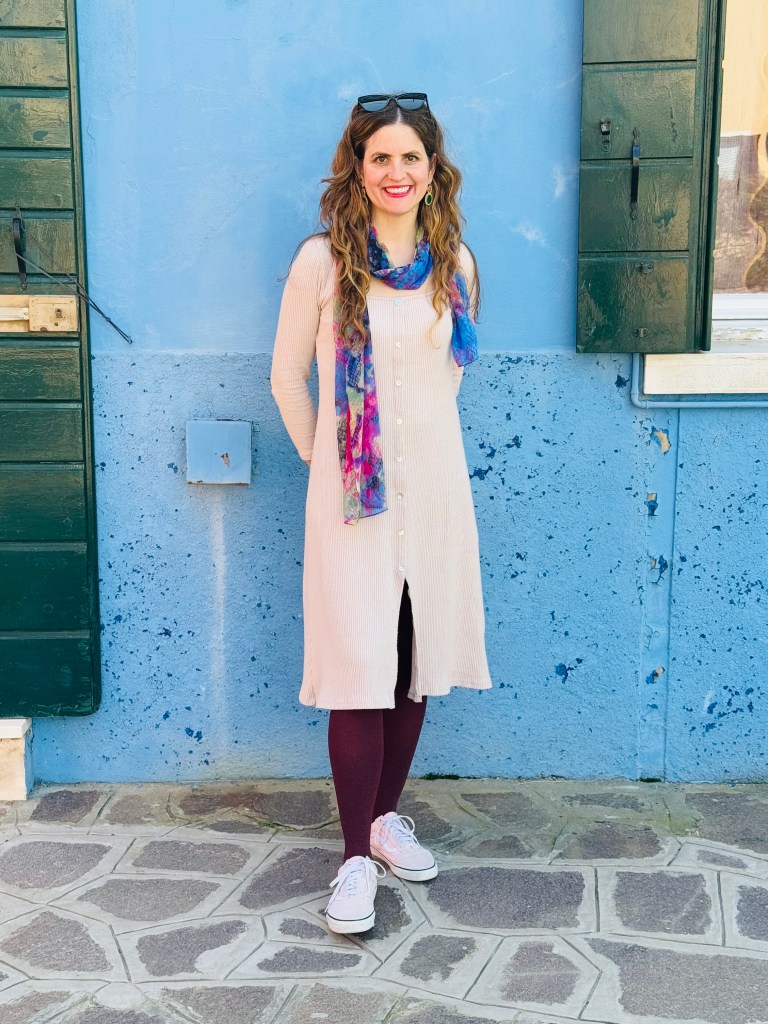
Outside of linguistics, I am probably busy being a mom, but I particularly enjoy—without any particular order—dancing (and taking dance lessons of any kind, more in particular classical, contemporary, and zouk), photography, filming, baking, hiking, listening to audiobooks, watching films and TV shows, watching sunsets, going to the beach, and going on adventures with my family like traveling and trying new foods and restaurants/cafes (see the picture below from our recent trip to Burano, Italy). I have two small daughters, Duna and Ona, ages 6 and 4, respectively.
 Maria del Mar Bassa Vanrell